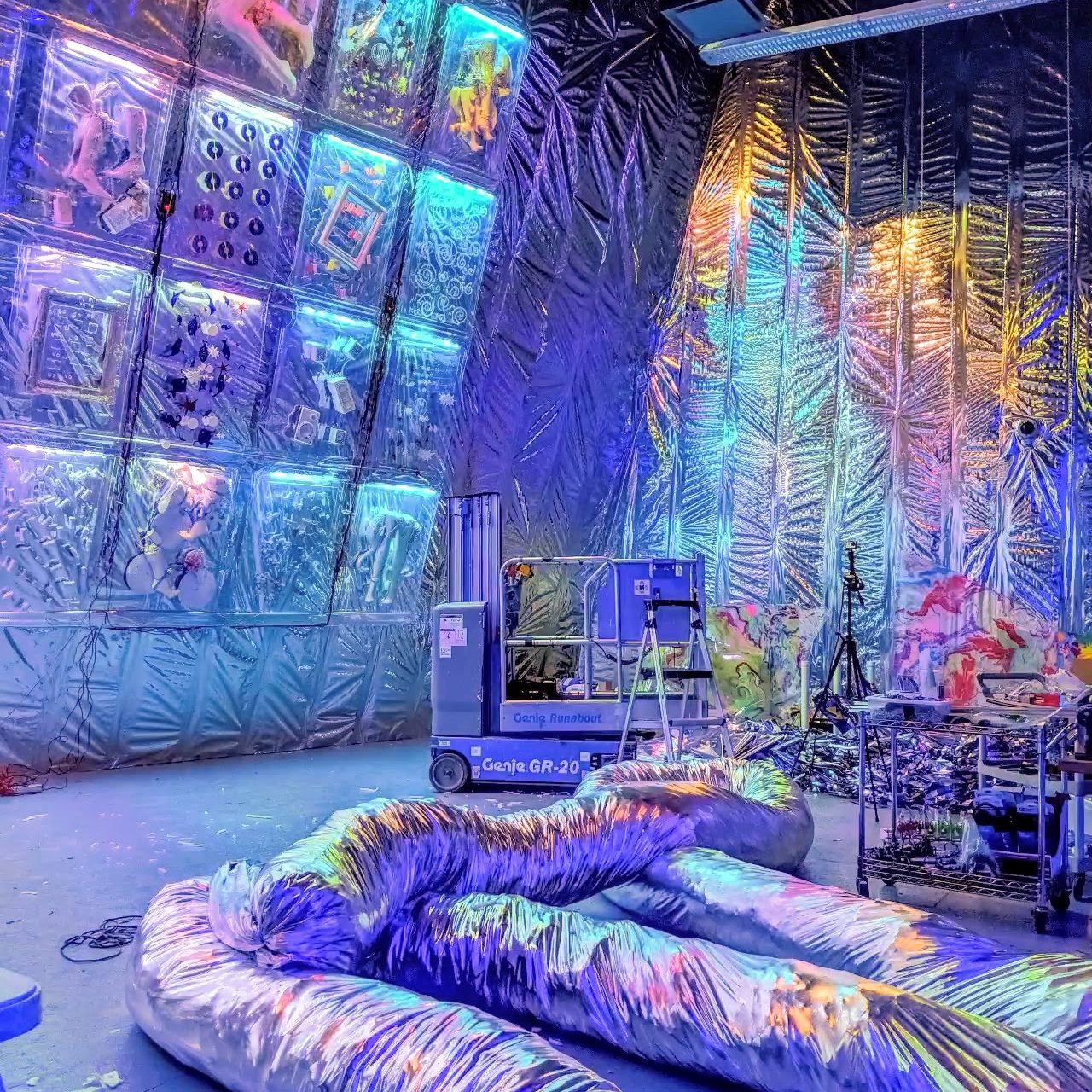
Immersive light art is redefining what public space can be. Where architecture once dominated civic environments through stone and structure, light-based installations are transforming plazas, corridors, and facades into experiential environments — spaces that respond, breathe, and feel. This shift is not aesthetic alone. It represents a fundamental change in how artists, architects, and city planners understand the relationship between human perception and the built environment.
Light as the Medium of Public Space
In the twenty-first century, public space is no longer defined solely by architecture, monument, or static sculpture. It is increasingly defined by experience. Unlike stone or bronze, light is dynamic — it moves, refracts, reflects, and transforms in real time. Where traditional public art occupies space, immersive light installation constructs it, enveloping viewers and dissolving the boundary between artwork and environment.
Historically, artists such as Dan Flavin and James Turrell explored light as a sculptural medium. What distinguishes contemporary practice is its integration with architecture, programmable technology, and civic intent at scale. A light installation today does not hang on a gallery wall — it constitutes the space itself. The viewer does not stand before the work. The viewer enters it. Perception becomes material. The body becomes part of the composition.
In site-specific work, architectural context determines form. Scale responds to spatial proportion. Reflection interacts with existing surfaces. The installation cannot be separated from its environment — a quality that makes immersive light art particularly powerful for public commissions, where civic identity and spatial experience are inseparable.
Synesthesia, Technology, and the Responsive Environment
Synesthesia — the blending of sensory experiences where sound may evoke color, or geometry trigger emotional memory — has become a foundational design philosophy in immersive light art. Rather than treating color as decoration, synesthetic practice composes it as a communication system. Specific hues activate calm; others stimulate movement or focus. Geometry creates visual rhythms that echo natural systems, anchoring viewers within complex spatial environments while dissolving rigid boundaries. Haiiileen’s exploration of synesthesia as design logic develops this approach across multiple installation systems.
The rise of programmable LED systems has radically expanded what is possible. Contemporary LEDs allow precise control of hue, intensity, timing, and behavioral response. Installations can now react to sound, movement, ambient temperature, or time of day — shifting immersive light art toward responsive architecture. Spaces that once remained static now adapt, creating environments that are different every time they are experienced.
Sustainability is central to the discipline’s future. Energy-efficient LEDs, solar integration, and programmable dimming reduce environmental impact without sacrificing visual power. As cities prioritize ecological responsibility, light-based public art must align with long-term sustainability goals — becoming not only spectacular but structurally and ecologically sound.
Light is not supplemental to the space — it is structural. It does not illuminate the environment; it constitutes it.
Civic Identity, Cultural Exchange, and the Future of Immersive Light
Public art functions as civic signal. Immersive light installations are particularly effective at activating public space because they operate across audiences — accessible without prior context, engaging without instruction. Cities use light festivals and permanent commissions to transform underutilized plazas, waterfronts, and facades into cultural destinations without permanent structural alteration. Light activates space on a timeline that monument cannot match.
Color and illumination transcend linguistic barriers, offering universally accessible experiences that increasingly serve as cultural diplomacy. International collaborations and civic commissions create shared visual languages across borders and communities. The emotional universality of light — its ability to calm, excite, gather, or dissolve — makes it one of the most effective tools for building shared civic identity in diverse urban populations. The spatial and perceptual principles behind this are explored further in Geometry as Emotional Architecture.
As cities grow denser and digital interfaces increasingly mediate human experience, immersive light art may serve a critical function: emotional infrastructure. The future of the practice lies at the intersection of synesthesia, LED technology, and civic design — an evolving discipline that reshapes architecture through perception, redefines the artist’s role within urban systems, and transforms public space into an experiential landscape. The work is not simply seen. It is inhabited.
